
Your monthly picture
Start entering figures
$0
left over each month
0% of income is committed
Where it goes
Figures stay in your browser. Nothing is sent to us unless you contact us.
This planner is an educational estimator. It uses simplified assumptions, does not account for taxes, irregular expenses, or inflation, and is not a recommendation. Please speak with a qualified professional about your own situation.
How to use the budget planner
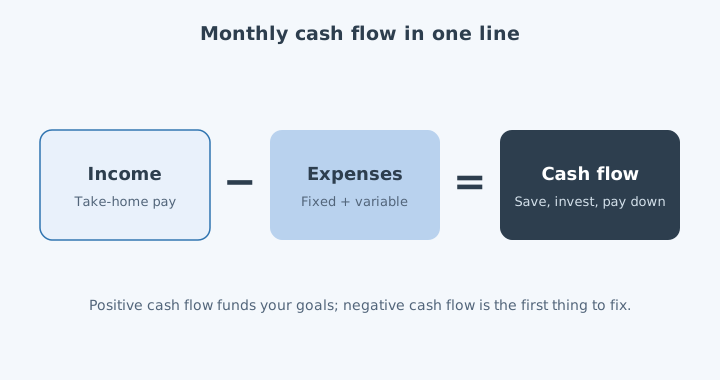
This free budget planner turns a month of income and spending into one clear number: your monthly cash flow. Enter your take-home income, then work through each category (home, living, lifestyle, debt payments, and saving and investing). The planner totals everything as you type and shows where your money goes. Your entries stay in your own browser; nothing is sent to us.
Getting accurate numbers
Use two or three recent bank and card statements rather than memory. Irregular costs are the ones people miss most: car registration, insurance premiums, gifts, and home repairs. Divide annual amounts by twelve so they show up in your monthly budget.
What a healthy monthly budget looks like
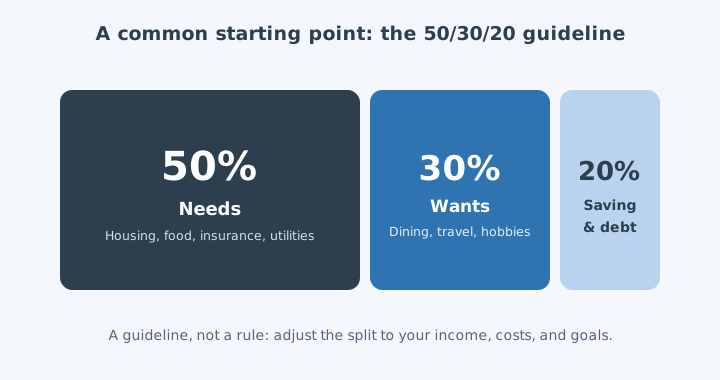
There is no perfect budget, but a common starting point is the 50/30/20 guideline: about half of take-home pay for needs, about 30% for wants, and at least 20% for saving and paying down debt. Treat it as a starting point and adjust it for your income, where you live, and what matters to you.
If your cash flow is negative
Start with the largest categories, because small cuts there matter most. Review subscriptions and insurance premiums, and look at high-interest debt first. The Consumer Financial Protection Bureau has free, practical money tools and guides.
Budgeting for retirement
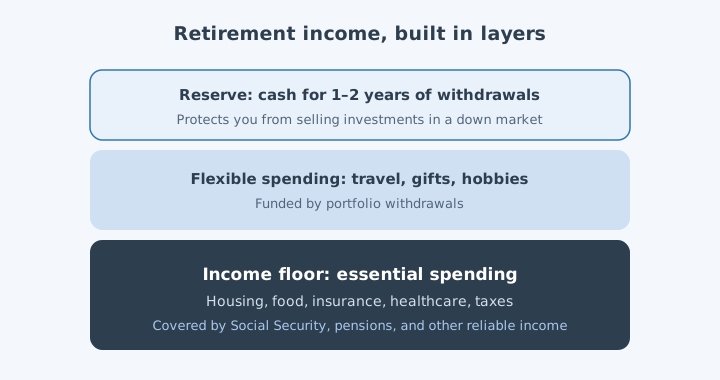
A retirement budget looks different: commuting and saving usually go down, while healthcare, travel, and home maintenance often go up. The budget planner is a good first step toward income planning, where we compare what you will spend with the income you can count on.
Budget planner FAQ
Is this budget planner really free and private?
Yes. There is no sign-up, and your numbers are stored only in your own browser on this device. Clear your browser data or use the reset option to remove them.
How much should I keep in an emergency fund?
A common guideline is three to six months of essential expenses. The budget planner’s “needs” categories give you that monthly number.
What should I do with the results?
Use the monthly cash flow to set a savings goal, then decide where it goes: emergency fund first, then any employer 401(k) match, then other goals. If you would like a second pair of eyes, schedule a free visit.
Now let’s find out what it means
Bring your numbers to a complimentary visit. We will show you what they say about when you can retire — and what would need to change to bring that date forward.