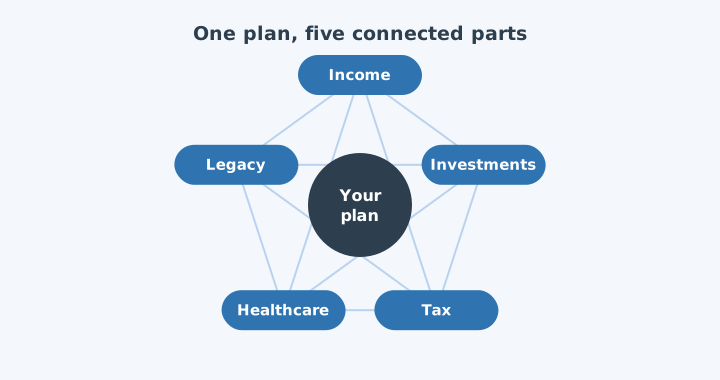
Most people do not have a financial problem. They have five of them, each handled by a different person who has never spoken to the others. Comprehensive planning is the engagement where income, investments, tax, healthcare, and legacy are designed as one thing — because in your life, they already are.
What comprehensive planning means
Comprehensive planning is financial planning that treats your income, investments, taxes, healthcare, and legacy as one connected plan instead of five separate conversations. In real life these decisions affect each other constantly, and a choice that looks good in one area can quietly cost you in another.
A few examples of how the pieces interact:
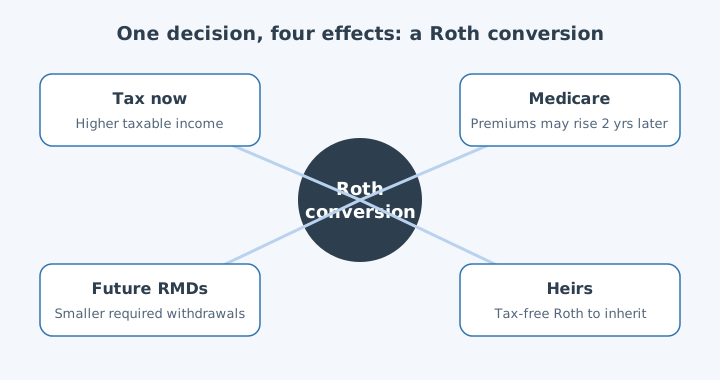
- A Roth conversion can lower lifetime taxes, but it raises this year's income, which can raise Medicare premiums two years later.
- Claiming Social Security later increases your income for life and the survivor's income, but it may mean drawing more from investments in the meantime.
- Leaving a Roth IRA to a high-earning child and a traditional IRA to a charity can leave your family more after taxes than splitting everything evenly.
Comprehensive financial planning is how those trade-offs get decided on purpose.
Our comprehensive planning process
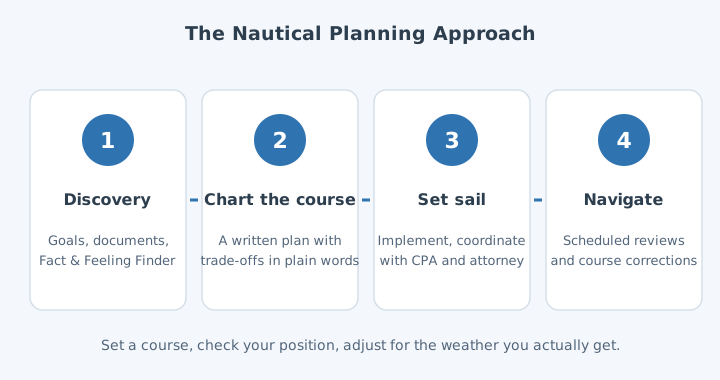
We call our approach the Nautical Planning Approach: set a course, check your position, and adjust for the weather you actually get.
1. Discovery
We start with what matters most to you and your family, then gather the documents: statements, tax returns, benefit summaries, Social Security estimates, and estate paperwork. Our Fact & Feeling Finder captures both the numbers and how you feel about risk.
2. Chart the course
We build a written plan covering income, investments, tax, healthcare, and legacy, with the trade-offs stated in plain language.
3. Set sail
We implement in a sensible order, coordinate with your CPA and estate planning attorney, and handle the paperwork so it actually gets done.
4. Navigate
We hold scheduled reviews and you have a standing invitation to call before any large decision. Plans drift; the point of an advisor is to notice.
Who benefits most from comprehensive planning
Comprehensive planning is most valuable when several decisions are coming at once: households within about ten years of retirement, people who have just retired, veterans moving from military to civilian life, and anyone who has recently inherited money, sold a business, or lost a spouse. It also suits people who already have a CPA, an attorney, and several accounts, but no one who looks at the whole picture.
A fiduciary you can verify
French Capital Management is an independent, veteran-owned firm and a Florida state-registered investment adviser. As a fiduciary we are required to act in your best interest, and for investment management we are fee-only. You can review our firm record and Form ADV on the SEC's Investment Adviser Public Disclosure site before we ever meet.
Your first visit is a complimentary, no-pressure conversation in our Jacksonville office or by video, and you will leave with something useful whether or not we work together.
Who this is for
You might recognise yourself here
You are within ten years of retiring
This is the window where decisions compound the most and mistakes are hardest to undo.
You have advisors who have never met each other
A CPA, an attorney, an insurance agent, and a 401(k) provider, none of whom sees the whole picture.
You want one person accountable
Someone who knows the whole file, answers the phone, and tells you the truth — including when the answer is to do nothing.
What we do
How this works in practice
No jargon, no black box. Here is the actual work.
-
Discovery
We start with what matters most to you and your family's aspirations. Then the documents: statements, tax returns, benefit summaries, and estate paperwork.
-
Chart the course
A written plan covering income, investments, tax, healthcare, and legacy — with the trade-offs stated in plain language rather than buried in an appendix.
-
Set sail
We implement in a sensible order, coordinate with your CPA and attorney, and handle the paperwork so it actually gets done.
-
Navigate
Scheduled reviews, plus a standing invitation to call before any large decision. Plans drift; the point of an advisor is to notice.
How it fits your bigger plan
One piece of a single plan
This is the Nautical Planning Approach in full. You would not sail from Jacksonville to Bermuda by deciding each morning which way looked good — you would set a course, check your position, and adjust for the weather you actually get. A financial plan works the same way.
See the comprehensive plan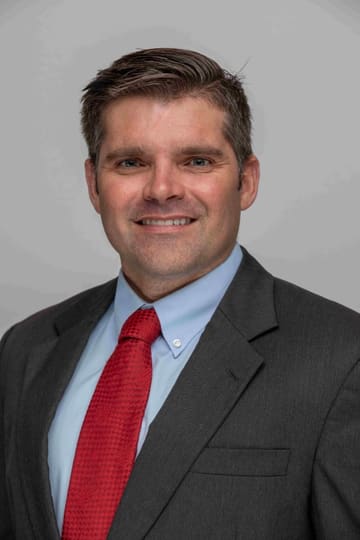
Your planner
Jason French, MBA
Founder and lead advisor of French Capital Management. A disabled combat veteran and former Merrill Lynch and Edward Jones advisor, Jason now works as an independent fiduciary for families in Jacksonville and across Northeast Florida.
Meet JasonQuestions
Common questions about Comprehensive Planning
What does the first meeting cost?
Nothing. The first visit is a complimentary, no-pressure conversation about your goals and whether we are a good fit. You will leave with something useful either way.
What should I bring?
If you have them handy: recent statements, your most recent tax return, Social Security estimates, benefit summaries, and any estate documents. If you have none of it, come anyway — we can start from a conversation.
How long does building a plan take?
Typically a few weeks across two or three meetings: discovery, plan presentation, then implementation. Complex situations take longer, and we would rather be right than fast.
What if I already have an advisor?
A second opinion is a reasonable thing to want, and we are comfortable telling you that your current plan looks sound. That happens, and it is a good outcome.
What is the difference between comprehensive planning and investment management?
Investment management focuses on how your portfolio is invested. Comprehensive planning covers the whole financial picture, income, taxes, healthcare, and legacy as well as investments, and makes sure the decisions in each area support the others.
Do you meet in person or online?
Both. We meet at our office on Silver Oak Drive in the Mandarin area of Jacksonville or by video, whichever is easier for you.
Related
Other pieces of the plan
Income Planning
A sustainable paycheck for retirement — Social Security timing, pensions, and survivor planning.
Investment Planning
Risk-based, customized portfolios using independent, cost-efficient funds — not a house list.
Tax Planning
Tax diversification designed to minimize income, capital-gains, and estate taxes over your lifetime.
Let's talk about your plan
A relaxed, no-pressure conversation about your goals. Free, about 30 minutes, and you will leave with something useful whether or not we work together.
Veteran-owned · Independent fiduciary · Jacksonville, Florida