We work alongside estate planning attorneys to maximize what actually reaches your beneficiaries, control how and when they receive it, and reduce the taxes along the way. Most of the costly mistakes we see are not exotic — they are a stale beneficiary form and a document nobody has read in a decade.
What legacy planning includes
Legacy planning is how you decide who receives what you have built, how and when they receive it, and who makes decisions for you if you cannot. It covers far more than a will: beneficiary designations, account titling, trusts, powers of attorney, healthcare directives, charitable gifts, and the taxes your heirs will face.
We are not attorneys and we do not draft documents or give legal advice. Our legacy planning role is to make sure your accounts and your estate documents tell the same story, and to coordinate with your estate planning attorney or introduce you to one.
How your assets actually pass to your heirs
Different assets transfer in different ways, and a will controls fewer of them than most people expect.
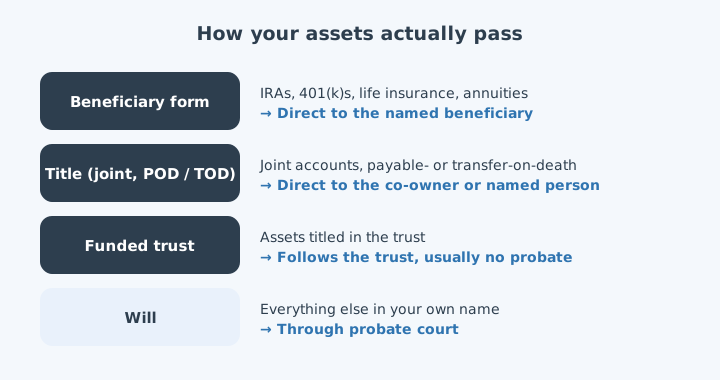
- By beneficiary designation: IRAs, 401(k)s, annuities, and life insurance go to the people named on the form, even if your will says otherwise.
- By title: jointly owned accounts and payable-on-death or transfer-on-death accounts pass directly to the co-owner or named person.
- By trust: assets titled in a funded trust follow the trust's instructions, generally without probate.
- By will: anything left over is distributed under your will, usually through probate court.
That is why a stale beneficiary form is the most common and most expensive mistake we find, and why we audit every one.
Inherited IRAs and the 10-year rule
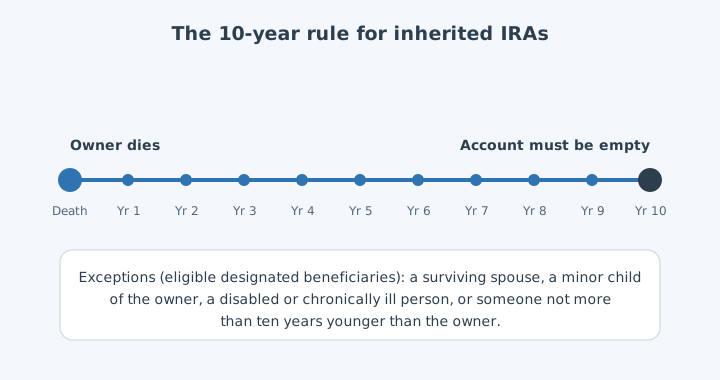
Under current rules, most non-spouse beneficiaries who inherit a retirement account must empty it within ten years. A spouse, a minor child of the owner, a disabled or chronically ill beneficiary, or someone not more than ten years younger than the owner may have other options. For a working adult child, a large inherited IRA can mean big taxable distributions during their peak earning years.
Which heir receives which account can change what each one keeps. A Roth IRA, for example, can be a better inheritance for a high-earning child, while a charity can receive tax-deferred money without paying income tax on it. The IRS covers the details in its guidance on retirement plan distributions.
Florida considerations for your legacy plan
Florida has no state estate tax and no inheritance tax, which simplifies planning for many Jacksonville families. Florida does have its own homestead rules: they can protect your home from certain creditors, and they can limit how you leave your home if you are survived by a spouse or minor child. These rules are exactly why we work with Florida estate planning attorneys rather than using generic documents.
Charitable giving and your legacy
If giving is part of your legacy, how you give matters. Qualified charitable distributions from an IRA after age 70½ can satisfy required distributions without adding to your taxable income. Donor-advised funds let you give a larger amount in one tax year and recommend grants over time. Naming a charity as a beneficiary of tax-deferred accounts can leave more to your family from other assets.
Keeping your legacy plan current
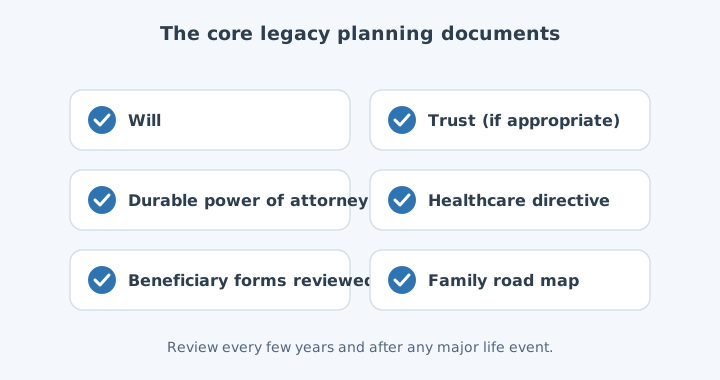
We recommend reviewing your documents and beneficiaries every few years and after any major life event: a marriage, divorce, birth, death, move, or large change in assets. We assemble a single road map listing accounts, advisors, and instructions so your family is not searching through filing cabinets at the hardest time. Legacy planning works best alongside your tax planning, and your first visit is complimentary.
Who this is for
You might recognise yourself here
Your documents are more than five years old
Wills, trusts, powers of attorney, and healthcare directives all age. So do the people named in them.
You have a blended family
Making sure a surviving spouse is cared for and children from a prior marriage are not accidentally disinherited takes deliberate structure.
You want to leave something to a charity or a grandchild
How you give matters as much as how much. The right account and the right vehicle can change the after-tax result substantially.
What we do
How this works in practice
No jargon, no black box. Here is the actual work.
-
Audit every beneficiary designation
Retirement accounts and life insurance pass by beneficiary form, not by will. This is the single most common and most expensive oversight we find.
-
Review titling and account ownership
How an account is titled decides whether it goes through probate and who controls it if you cannot.
-
Coordinate with your attorney
We do not draft documents. We make sure the plan the attorney drafts and the accounts we manage tell the same story — including trust funding, which is often left half-finished.
-
Plan the tax of the transfer
The ten-year rule on inherited IRAs, step-up in basis on taxable assets, and which account to leave to which heir.
-
Assemble the road map
One document listing accounts, advisors, and instructions, so your family is not searching through filing cabinets during the worst month of their lives.
How it fits your bigger plan
One piece of a single plan
Legacy planning is where the rest of the plan proves itself. The income plan supports you, the tax plan protects what you keep, and the legacy plan decides where it goes. Reviewing them together is how we avoid a Roth conversion that helps you but hurts your heirs, or an inheritance that lands in the wrong tax year.
See the comprehensive plan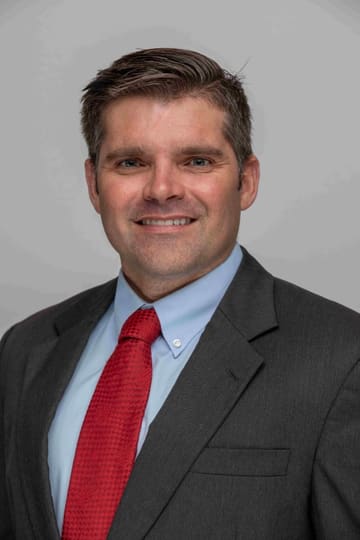
Your planner
Jason French, MBA
Founder and lead advisor of French Capital Management. A disabled combat veteran and former Merrill Lynch and Edward Jones advisor, Jason now works as an independent fiduciary for families in Jacksonville and across Northeast Florida.
Meet JasonQuestions
Common questions about Legacy & Estate Planning
Do you write wills or trusts?
No. We are not attorneys and we do not provide legal advice. We coordinate with your estate planning attorney — or introduce you to one — and make sure the accounts line up with the documents.
Why do beneficiary forms matter so much?
Because they override your will. A retirement account left to an ex-spouse on a form from 1998 goes to the ex-spouse, no matter what the will says. It takes ten minutes to check and it is the highest-value ten minutes in estate planning.
What is the ten-year rule on inherited IRAs?
Most non-spouse beneficiaries must now empty an inherited retirement account within ten years, which can land a large taxable distribution in their peak earning years. Which heir receives which account can materially change what they keep.
Is my estate large enough to need this?
Estate planning is not only about estate tax. It is about avoiding probate, naming who decides if you cannot, and making sure your family knows what exists and where. That applies at every level of wealth.
Do I need a trust or just a will?
It depends on your goals, your family, and your assets. Trusts can help avoid probate, manage money for minors or beneficiaries who need oversight, and keep matters private. Your estate planning attorney makes that recommendation; we help you understand the trade-offs and make sure your accounts are titled to match.
How often should I review my estate plan?
Every few years, and after any major life event such as a marriage, divorce, birth, death, move to a new state, or significant change in assets. Beneficiary forms deserve a check every time.
Related
Other pieces of the plan
Comprehensive Planning
Many pieces, one plan — the holistic engagement that ties every part of your financial life together.
Income Planning
A sustainable paycheck for retirement — Social Security timing, pensions, and survivor planning.
Investment Planning
Risk-based, customized portfolios using independent, cost-efficient funds — not a house list.
Let's talk about your plan
A relaxed, no-pressure conversation about your goals. Free, about 30 minutes, and you will leave with something useful whether or not we work together.
Veteran-owned · Independent fiduciary · Jacksonville, Florida