

Are you on track to maximize your Social Security benefits?
Social Security is a critical part of most retirees’ income, but many people don’t fully understand how to optimize their benefits. Whether you’re nearing retirement or already receiving benefits, knowing the right strategies can significantly impact your financial well-being. Social Security offers several options for maximizing your payout, and making the right decisions now can help you secure a more comfortable and predictable retirement income.
The Basics of Social Security Benefits
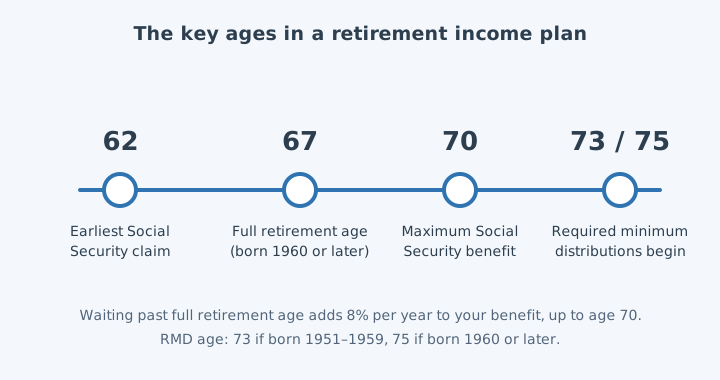
Social Security is designed to provide financial support to individuals in retirement, but how much you receive depends on factors like your work history, the age you start collecting, and whether you’re married or divorced. You can start receiving benefits as early as age 62, but your monthly benefit will be reduced compared to waiting until full retirement age (FRA) or beyond.
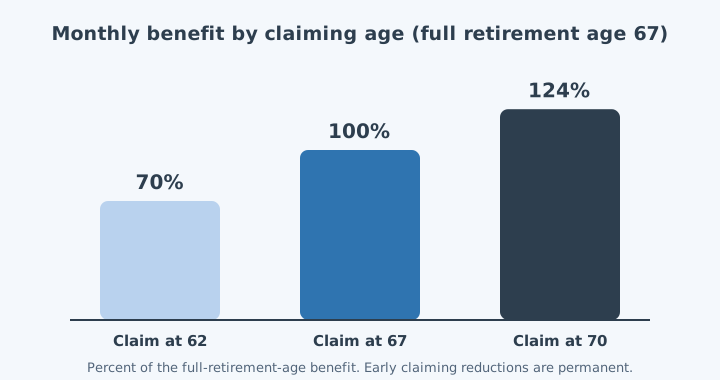
Full Retirement Age (FRA) is determined by your birth year, generally ranging from 66 to 67 years old.
Smart Strategies to Optimize Your Social Security Benefits
1. Delay Benefits for Higher Monthly Payments
One of the most effective ways to maximize your Social Security benefits is to delay claiming until age 70. For each year you wait beyond your FRA, your benefit increases by about 8% per year. This means that if you’re able to afford it, waiting to claim can result in a larger monthly check for the rest of your life.
💡 Tip: If you’re still working, delaying benefits may allow you to earn more money while reducing the need to rely on Social Security.
2. Coordinate with Your Spouse for Maximum Benefits
If you’re married, there are spousal benefits that could potentially increase your total payout. A lower-earning spouse can claim up to 50% of the higher-earning spouse’s Social Security benefit at FRA, even if they never worked or earned a lesser income. Additionally, if one spouse passes away, the surviving spouse can inherit the higher benefit.
💡 Tip: Consider the age difference and work history of both spouses to determine the best time for each person to claim. Coordinating the timing can lead to a larger household benefit.
3. Consider Your Health and Life Expectancy
If you’re in good health and expect to live many years into retirement, delaying Social Security benefits can be a smart choice. However, if you have significant health concerns or a family history of shorter life expectancy, you might consider starting benefits earlier to ensure you receive them over your lifetime.
💡 Tip: Factor in your family’s health history and personal circumstances when deciding when to claim. Consulting with a financial planner can provide clarity based on your unique situation.
4. Understand the Impact of Working While Collecting
If you decide to claim Social Security before your full retirement age, and you continue working, your benefits may be reduced if your income exceeds a certain threshold. However, once you reach FRA, your benefits will no longer be reduced, even if you continue to work.
💡 Tip: If you plan to continue working, carefully evaluate the trade-off between earning income and receiving reduced Social Security benefits early on. You may benefit from delaying your benefits until you stop working or reach FRA.
5. Know the Survivor and Divorced-Spouse Rules
The old “file and suspend” strategy was eliminated for anyone who requested it after April 29, 2016, so it is no longer an option. The rules that still matter most are survivor and divorced-spouse benefits. A surviving spouse can begin survivor benefits as early as age 60 (50 if disabled), at a reduced amount, and can sometimes take one benefit first and switch to the other later. A divorced spouse may claim on an ex-spouse’s record if the marriage lasted at least ten years and they have not remarried.
Tip: If you are widowed or divorced, ask about these benefits before you claim; the order you take them in can make a real difference.
6. Keep an Eye on Taxes and Other Income
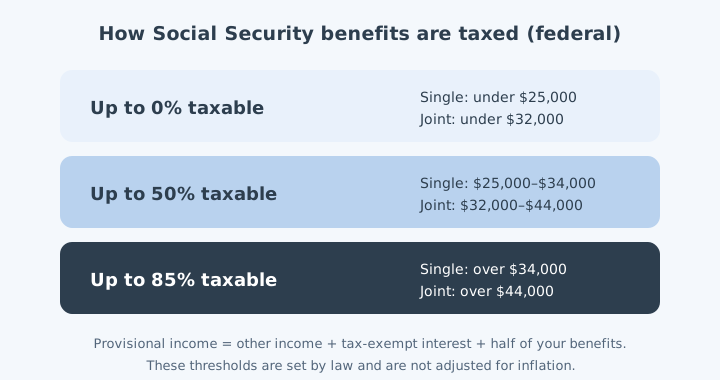
Social Security benefits are subject to federal taxes if your combined income (including wages, retirement distributions, and other sources) exceeds certain thresholds. Careful planning can help reduce the tax burden on Social Security income.
💡 Tip: If you’re still working or withdrawing from retirement accounts, plan your distributions carefully to avoid unnecessary taxation on your benefits.
How We Can Help You Maximize Your Social Security Benefits
Understanding the full scope of Social Security benefits can be complex, but with the right guidance, you can make smarter choices to optimize your retirement income. Our team of financial planners can help you evaluate the best time to start your benefits, coordinate with your spouse for maximum advantage, and tailor a strategy that suits your health, lifestyle, and financial goals.
👉 Ready to maximize your Social Security benefits? Contact us today for a free consultation and a personalized strategy for your retirement!
Common Social Security Optimization Mistakes to Avoid
🚨 Key Pitfalls to Watch Out For:
❌ Claiming early without understanding the long-term impact — Claiming before FRA reduces your monthly benefits, and many retirees don’t realize the full consequences of this decision.
❌ Not considering spousal and survivor benefits — Failing to strategize with your spouse could result in leaving money on the table, especially in cases of widowhood.
❌ Ignoring the tax implications — Overlooking the tax impact of Social Security benefits could lead to unexpected costs.
Tools to help you maximize your Social Security benefits
Start with your own earnings record. Your statement in your my Social Security account shows your estimated benefit at different ages, and the SSA explains how claiming age changes your check on its retirement benefits page. Check that every year of earnings is recorded correctly; a missing year lowers your benefit.

Frequently asked questions
How can I increase my Social Security benefit?
Work at least 35 years (benefits are based on your highest 35 years of earnings), correct any errors in your record, and delay claiming if you can; every year past full retirement age up to 70 adds 8%.
Does working after I claim increase my benefit?
It can. Additional years of higher earnings can replace lower years in your record and raise your benefit, and before full retirement age the earnings test may temporarily withhold benefits that are later credited back.
Next steps to maximize your Social Security benefits
To maximize your Social Security benefits, begin with your own statement, confirm your earnings record, and compare benefits at 62, full retirement age, and 70. Married couples should also read our guide to Social Security timing and survivor benefits. Our income planning service runs these numbers alongside your pension, savings, and taxes, and your first visit is complimentary.