

“When can I retire?” It is the most common question we hear, and people are always a little disappointed by the honest answer: retirement is not a date the calculator hands you. It is a set of trade-offs, and you get to choose which ones you are willing to make.
That sounds like a dodge. It is the opposite. Once you see the levers, the date stops being a mystery and becomes something you can actually influence.
Retirement is really four questions wearing a trench coat
When someone asks “can I retire at 62?” they are actually asking four separate things at once:
- What will I spend? Not what you earn now — what your life will cost once the mortgage, the commuting, and the kids’ expenses have changed.
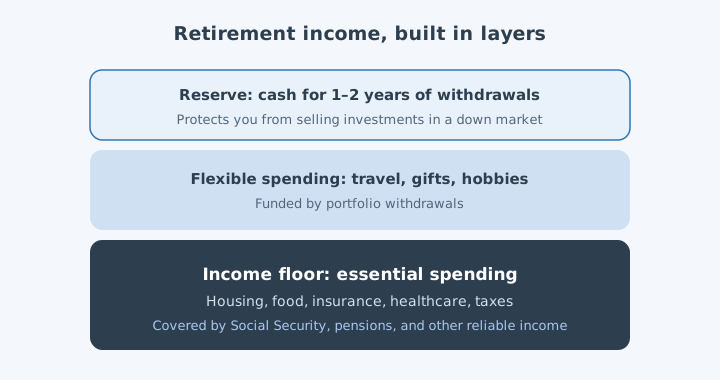
- What is guaranteed? Social Security and any pension form the floor your lifestyle stands on. The bigger that floor, the less your plan depends on the market cooperating.
- What must my savings produce? The gap between what you spend and what is guaranteed is the job your portfolio has to do.
- How long, and how certain? A plan that works if you live to 82 and fails if you live to 94 is not a plan you want.
The lever most people forget
Everyone focuses on the size of the nest egg. But the single most powerful lever is usually spending, because it works on both ends at once: every dollar you do not spend is a dollar you did not have to save, and a dollar you do not have to withdraw.
Cutting planned retirement spending by ten percent does more for most plans than a decade of chasing an extra one percent of return — and you control it entirely.
The second-most powerful lever is time, and not in the way people expect. Working one extra year is unusually potent: it adds a year of saving, removes a year of withdrawals, and often bumps your Social Security benefit — three effects stacking on one decision.
Why a single number lies to you
Online calculators produce a confident figure because they assume a steady average return. Real markets do not deliver averages on a schedule. A 25% drop in your first two years of retirement does far more damage than the same drop ten years in, because you are selling shares to live on while they are down. This is called sequence-of-returns risk, and it is the reason two people with identical savings can have completely different outcomes.
A good plan does not pretend to predict returns. It builds in a cash buffer and a flexible withdrawal rule so that a bad first few years is an inconvenience rather than a catastrophe.
How we actually answer the question
In a first visit, we sketch your floor (guaranteed income), your gap (what savings must cover), and a realistic spending number. Then we stress-test it against a poor market, higher inflation, and a longer life than you expect. What comes out is not one date but a short menu: retire at 62 with this lifestyle, at 64 with that one, or at 63 if you are willing to work part-time for two years.
That menu is worth far more than a number, because it is yours to choose from — with your eyes open.
When can I retire? The ages that shape the answer
A few ages come up in almost every retirement plan, and knowing them makes the question far more concrete:
- 55: if you leave your job in or after the year you turn 55, you can generally take withdrawals from that employer’s 401(k) without the 10% early-withdrawal penalty.
- 59½: the age at which IRA withdrawals are generally free of the early-withdrawal penalty (income tax still applies to pre-tax money).
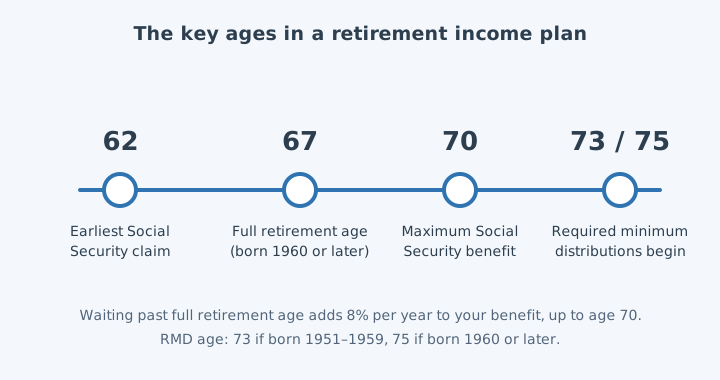
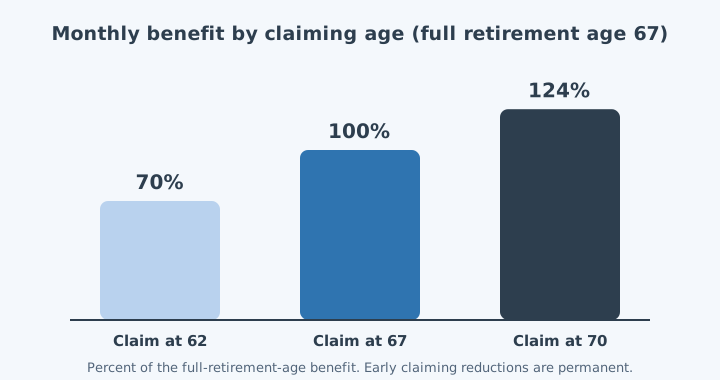
- 62: the earliest age to claim Social Security, at a permanently reduced benefit.
- 65: Medicare eligibility. Retiring earlier means paying for health coverage until then.
- 67: full retirement age for Social Security if you were born in 1960 or later.
- 70: the age your Social Security benefit stops growing.
The Social Security Administration explains how claiming age affects your check on its retirement benefits page.

Frequently asked questions
Can I retire at 55?
Possibly, if your savings can cover your spending until Social Security and Medicare begin. The practical hurdles are health insurance until 65, penalty-free access to your money (the age-55 rule for 401(k)s helps), and a withdrawal rate your portfolio can sustain for a longer retirement.
How much do I need to retire?
There is no universal number. Start with what you will spend each year, subtract the income you can count on, and the gap is what your savings must provide. The size of that gap, and how long it must last, sets the target.
Should I work one more year?
Often it is the most powerful lever you have: another year of saving, one less year of withdrawals, and frequently a higher Social Security benefit. Whether it is worth it depends on your health, your work, and what that year means to you.
What is the 4% rule?
It comes from 1990s research that tested historical markets: withdrawing 4% of a portfolio in the first year of retirement, then adjusting that amount for inflation, lasted through every 30-year period studied. It is a useful starting point, not a guarantee. Your investment mix, fees, flexibility, and how long retirement lasts can move the safe number up or down.
Next steps: answering “when can I retire?” for your plan
To answer when can I retire for your own household, start with what you spend today and what you expect to spend once work stops; our free budget planner makes that quick. Then see how the pieces fit: income planning covers Social Security timing, pensions, and the order you draw from savings, and healthcare planning covers coverage before Medicare. A complimentary visit turns those numbers into a short menu of retirement dates you can choose from.