

Social Security timing is almost always framed the same way: should I claim early at 62, or wait until 70 for a bigger check? That is a real trade-off. But for married couples it is the wrong headline, because it leaves out the person the decision affects most — the survivor.
The basic trade-off, briefly
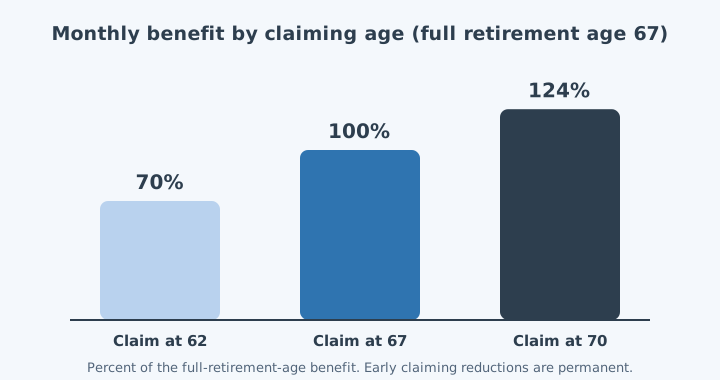
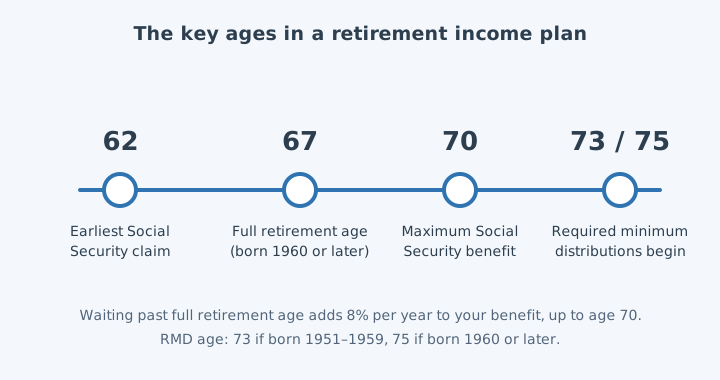
Claim at 62 and your benefit is permanently reduced. Wait until your full retirement age and you get 100% of it. Wait until 70 and it grows by roughly 8% a year in between. Claiming early gets you more checks; waiting gets you larger ones. Where the two lines cross is somewhere in your early eighties — so the crude version of the question is really “how long do you expect to live?”
That framing is fine for a single person. For a couple it misses the point.
What happens when one spouse dies
Here is the part that rarely gets explained clearly. When one spouse passes away, the household does not keep both Social Security checks. It keeps the larger of the two and loses the smaller one entirely.
For a married couple, the higher earner’s benefit is not just their income — it is the income that will support whichever spouse lives longer, potentially for many years alone.
This changes the strategy. Delaying the higher earner’s benefit does double duty: it grows the check while both are alive, and it permanently raises the floor for the survivor. The lower earner’s benefit, by contrast, often matters less to delay, because it may disappear when the first spouse dies.
A common pattern
For many couples, a sensible starting point looks like this: the lower earner claims earlier to get income flowing, and the higher earner delays as long as is practical — ideally to 70 — to maximise the benefit that will outlive them both. It is not a universal rule, but it is a very different instinct from “we should both claim as soon as we can.”
The factors that actually decide it
- Health and family history. Honest expectations about longevity, for both of you.
- The gap between your two benefits. The wider it is, the more delaying the higher one matters.
- Whether you are still working. Claiming before full retirement age while earning can temporarily reduce your benefit.
- Other income. If a pension or portfolio can bridge a few years, delaying becomes far easier to afford.
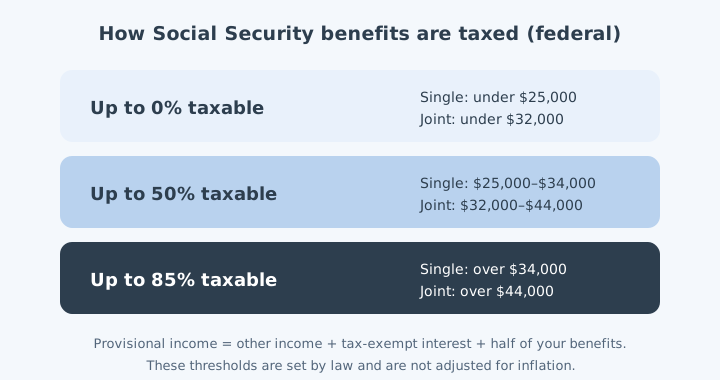
- Taxes. How much of your benefit is taxed depends on your other income, which ties this decision to your withdrawal plan.
The point
Social Security is one of the few guaranteed, inflation-adjusted income streams most people will ever have. Deciding when to claim is not a bet on your own lifespan — it is a decision about the security of whichever one of you is left. That deserves more than a rule of thumb, and it is worth getting right the first time, because most of it cannot be undone.
Social Security timing for singles, spouses, and survivors
The right claiming age depends on who else relies on your record. A few rules are worth knowing before you decide:
- Spousal benefits stop growing at full retirement age. A spouse can receive up to 50% of the worker’s full benefit, but, unlike your own benefit, a spousal benefit does not earn delayed retirement credits past full retirement age.
- Survivor benefits can start as early as 60 (50 if disabled), at a reduced amount. A survivor who has their own benefit can sometimes take one and switch to the other later.
- Divorced spouses may qualify on an ex-spouse’s record if the marriage lasted at least ten years and they have not remarried.
- The earnings test applies before full retirement age. If you claim early and keep working, benefits can be temporarily withheld above an annual earnings limit.
You can see your own estimates at different claiming ages in your my Social Security account, and the SSA explains survivor rules on its survivors benefits page.

Frequently asked questions
What is the break-even age for delaying Social Security?
For many people the cumulative totals from claiming at 62 and claiming later cross somewhere around the early eighties. For a married couple, though, the survivor’s income often matters more than the break-even age.
Can I change my mind after I claim?
Only in a narrow way: you can withdraw your application within 12 months of claiming by repaying the benefits received, once in your lifetime. After full retirement age you can also voluntarily suspend benefits to earn delayed credits.
Does Social Security keep up with inflation?
Yes. Benefits receive an annual cost-of-living adjustment tied to the Consumer Price Index, which is one reason a larger benefit from delaying can be so valuable over a long retirement: every future increase is applied to a bigger base.
Should both spouses delay Social Security to 70?
Not necessarily. The higher earner’s benefit usually matters most because it becomes the survivor’s benefit, so delaying that one often pays off. The lower earner’s benefit may end when the first spouse dies, so claiming it earlier to get income flowing can make sense. Health, age difference, other income, and taxes decide the right mix for each couple.
Next steps with your Social Security timing
Good Social Security timing starts with your actual earnings record, not a rule of thumb. Download your statement, note the benefit at 62, at full retirement age, and at 70 for each spouse, and then see how the decision fits your wider income planning and tax planning. For more strategies, read how to maximize your Social Security benefits. If you would like the numbers run for your household, a complimentary visit is the easiest place to start.