

Everyone is a long-term investor until a market drop of 30% arrives. The decisions people most regret are almost always made in the middle of a decline, when fear is loudest and the future feels certain to keep getting worse. The fix is not more willpower. It is a decision made in advance.
Why drops feel different than they read
On paper, a bear market is a temporary decline followed, historically, by a recovery. Lived through, it is a daily stream of alarming headlines, a shrinking account balance, and a very human urge to make it stop. The urge to sell is not stupidity — it is your brain doing exactly what it evolved to do when something threatens you. The problem is that selling locks in the loss and, worse, leaves you on the sidelines for the recovery, which historically arrives without warning.
The investors who do well in a downturn are rarely the ones who saw it coming. They are the ones who decided ahead of time what they would do, and then did nothing else.
The policy we set while the water is calm
With clients, we write down — before any storm — a short set of rules for what happens when markets fall. It usually includes:
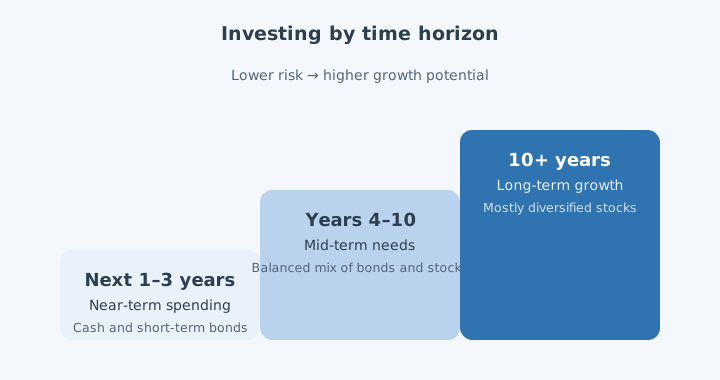
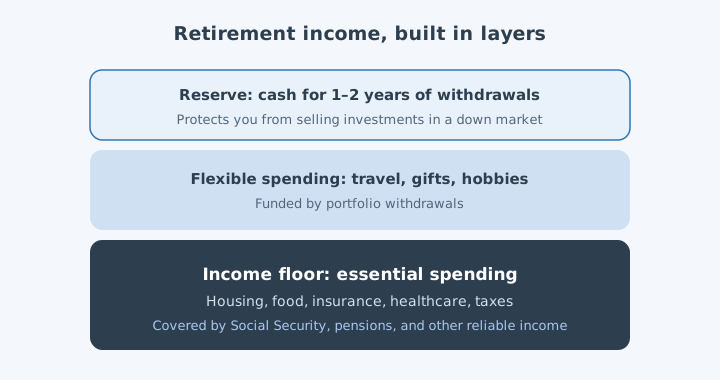
- A cash and bond buffer. Enough safe money to fund one to three years of spending, so that a fall never forces you to sell stocks at the bottom to pay the bills. This single feature does more for staying invested than any pep talk.
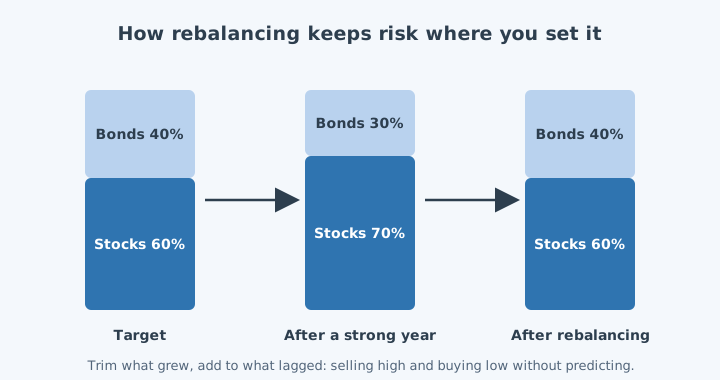
- A rebalancing trigger. When stocks fall far enough that your mix drifts, we rebalance — which mechanically means buying more of what just got cheaper. It feels wrong and it is right.
- A media rule. Permission, agreed in advance, to stop watching the financial news during a decline. It is engineered to alarm you; you are allowed to turn it off.
- A tax-loss check. In taxable accounts, a decline is an opportunity to harvest losses that lower your future tax bill — turning a bad market into a small silver lining.
What a downturn is not
A market fall is not a signal to abandon the plan. If the plan was built properly — with the right allocation for your timeline and a buffer for your spending — then a 30% drop is an event it already anticipated, not a sign that something has gone wrong. The allocation was chosen knowing that falls of this size happen every decade or so. Nothing has broken. The plan is doing precisely what it was designed to do.
The uncomfortable truth
The hardest part of investing is not picking funds or timing the market. It is behaving well when it is frightening to do so. That is most of what a good advisor is actually for — not a secret forecast, but a steady hand and a written plan on the day the headlines are screaming. If you would like to have that plan in place before you need it, that is a conversation worth having now, while the water is calm.
Your market drop checklist
If you do not yet have a written plan, these are the questions to answer before the next decline, while you are calm enough to answer them well:
- How many years of spending are held in cash and high-quality bonds?
- At what point does the portfolio get rebalanced back to its target mix?
- Which taxable accounts could harvest losses, and who will check?
- What will you not do? For most people that is selling everything or stopping contributions.
- Who will you call before making any change?
The SEC’s investor education site, Investor.gov, has plain-language guides on diversification and rebalancing. Past performance does not guarantee future results, and no strategy can prevent losses in a declining market.

Frequently asked questions
Should I sell when the market drops?
Selling after a drop locks in the loss and risks missing the recovery, which has historically arrived without warning. If a decline makes you want to sell, the better question is whether your allocation matched your real tolerance for risk to begin with.
Is a market drop a good time to invest more?
For long-term money, regular investing through a decline means buying at lower prices, and rebalancing does the same thing automatically. Money you need soon should not be in stocks in the first place.
How much cash should I keep for a market drop?
For working households, an emergency fund of several months of expenses is the usual starting point. For retirees drawing on their savings, many plans keep one to three years of expected withdrawals in cash and high-quality bonds, so spending never depends on selling stocks during a decline. The right amount depends on your other income and your comfort with risk.
How long do market drops usually last?
It varies widely. Some declines have recovered within months, while others have taken several years to return to their previous highs. Because no one can reliably predict the length of the next one, a plan built on a cash buffer and a rebalancing rule is more dependable than any forecast. Past performance does not guarantee future results.
Should I stop contributing to my 401(k) during a market drop?
For most people, no. Regular contributions during a decline buy shares at lower prices, and stopping them usually means missing part of the recovery. If money is tight, it is better to adjust your budget than to abandon a long-term habit at exactly the wrong moment.
Next steps before the next market drop
The best time to prepare for a market drop is before it starts. Check how much risk you are really comfortable with using our free risk tolerance assessment, then compare it with how your money is actually invested. Our investment planning builds the cash buffer, rebalancing rules, and time-horizon segments described above into one written plan, so the next decline is something you already prepared for.