
What does fiduciary mean? The word “fiduciary” gets used loosely in financial advertising, which is a shame, because it describes something specific and genuinely important. Understanding it is one of the most useful things you can do before you hand anyone your life savings.
Two standards, one big gap
Financial advice in the United States has historically been governed by two different standards, and the difference between them is not a technicality.
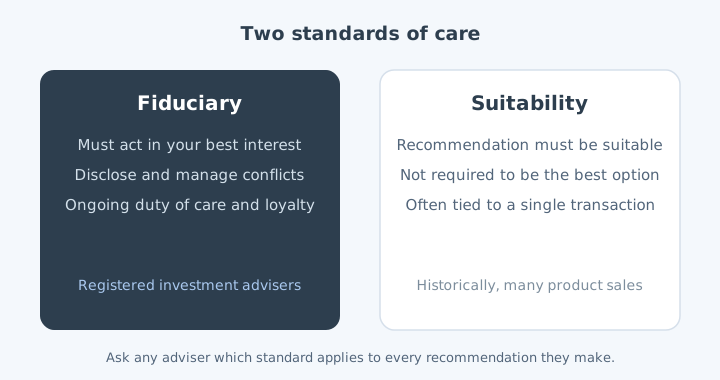
- The fiduciary standard requires an adviser to act in your best interest. If two products would both work and one is cheaper or better for you, the fiduciary is obligated to steer you to it.
- The suitability standard requires only that a recommendation be suitable — appropriate for someone in your situation. Under suitability, a more expensive product that pays the salesperson more can still be recommended, as long as it is not unsuitable.
“Suitable” and “best” are not the same word, and the space between them is where a great deal of money quietly leaves ordinary investors’ accounts.
Why the difference is easy to miss
From the client’s chair, a suitability-standard salesperson and a fiduciary adviser can look identical. Both are friendly, credentialed, and confident. The difference only shows up in the recommendations — in whether the product chosen was the best available for you, or merely an acceptable one that happened to pay well. And by the time that difference compounds across decades of fees, the meeting where it was decided is long forgotten.
How to tell what you are dealing with
You do not have to guess. A few direct questions cut through it:
- “Are you a fiduciary, in writing, one hundred percent of the time?” The qualifier matters — some people are fiduciaries for part of what they do and salespeople for the rest.
- “How exactly are you paid?” A transparent advisory fee is easy to explain. If the answer is vague or involves commissions on products, keep asking.
- “Do you sell your own firm’s products?” An independent adviser with no house product line has one fewer conflict to manage.
- “Can I see your Form ADV?” Registered investment advisers file this disclosure document; it lays out services, fees, and conflicts. A willing, prompt answer is a good sign.
Where we stand
French Capital Management is an independent Registered Investment Advisory firm. That means a fiduciary duty to act in your best interest, no proprietary products to push, and an open universe of funds chosen on cost and quality. For investment management we are fee-only; if you ever buy an insurance product through us, the insurer pays a commission, which we tell you about before you decide. You can look up the firm’s Form ADV and verify Jason French’s clean regulatory record on FINRA BrokerCheck before you ever sit down — and we would genuinely encourage you to. Trust should be verified, not assumed.
What changed with Regulation Best Interest
Since June 2020, broker-dealers have been subject to the SEC’s Regulation Best Interest, which raised the bar above the old suitability standard for recommendations to retail customers. It is a meaningful improvement, but it is not the same as the ongoing fiduciary duty that registered investment advisers owe their clients under the Investment Advisers Act of 1940. The practical advice has not changed: ask which standard applies to every recommendation.
How to verify a fiduciary
You can look up any investment adviser, state- or SEC-registered, on the SEC’s Investment Adviser Public Disclosure site. The record shows registrations, the firm’s Form ADV, and any disciplinary history. The SEC’s Investor.gov explains the different types of financial professionals in plain language.

Frequently asked questions
Is every financial advisor a fiduciary?
No. “Financial advisor” is not a regulated title. Registered investment advisers owe a fiduciary duty; many salespeople and brokers operate under different standards, at least for part of what they do.
Does fee-only mean fiduciary?
Not automatically, but the two often go together because a fee-only adviser is paid by the client rather than by commissions on products. Ask both questions: how are you paid, and are you a fiduciary for every recommendation?
Is French Capital Management a fiduciary?
Yes. As a registered investment adviser, we owe clients a fiduciary duty to act in their best interest. For investment management we are fee-only. If a client buys an insurance product through us, the insurance company pays a commission, which we disclose before any decision, and clients are never obligated to buy insurance from us.
What questions should I ask a financial advisor?
Ask whether they are a fiduciary for every recommendation, how they are paid in dollars and percentages, whether they sell their own firm’s products, what their Form ADV says about conflicts of interest, and whether they have any disciplinary history. A good adviser answers all five plainly and in writing, and is glad you asked.
Can a fiduciary still have conflicts of interest?
Yes. Being a fiduciary does not mean an adviser has no conflicts; it means they must disclose them and put your interests first when they exist. Commissions on insurance products, fees that rise with assets under management, and firm-specific products are all examples. Form ADV lists an adviser’s material conflicts, so read it, and ask how each one is managed in your case.
Next steps: choosing a fiduciary you can verify
Before hiring any adviser, ask whether they act as a fiduciary for every recommendation, how they are paid, and where you can read their Form ADV. Our own answers are on our disclosures page, and you can learn about Jason’s background on the about page. If you want one fiduciary looking at your whole financial picture, see how comprehensive planning works, and book a complimentary visit when you are ready.